
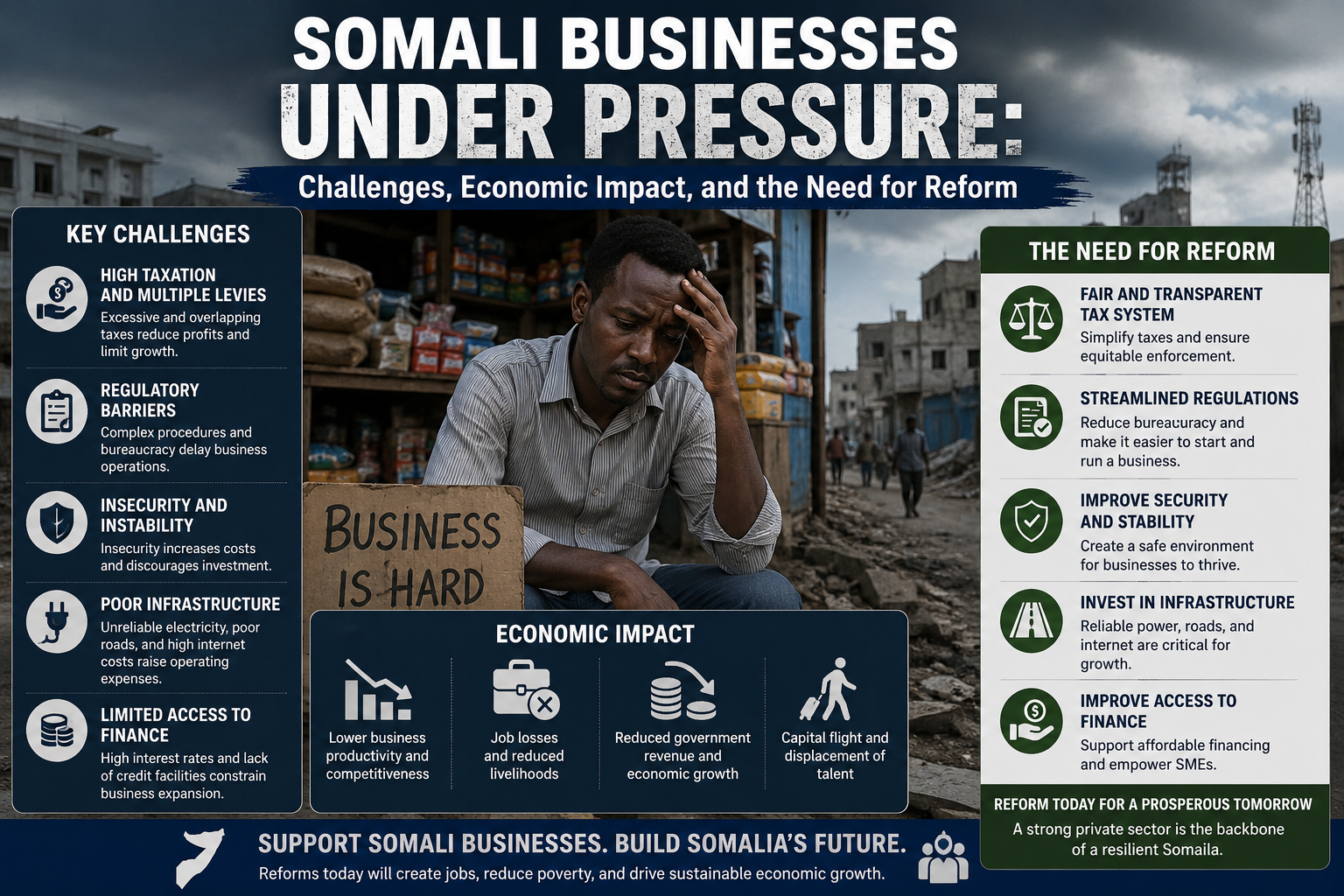
Somalia’s private sector has long been recognized as one of the most resilient business communities in Africa.
Despite decades of political instability, insecurity, and weak public institutions, Somali entrepreneurs have continued to sustain economic activity through trade, telecommunications, transport, construction, remittances, and retail businesses.
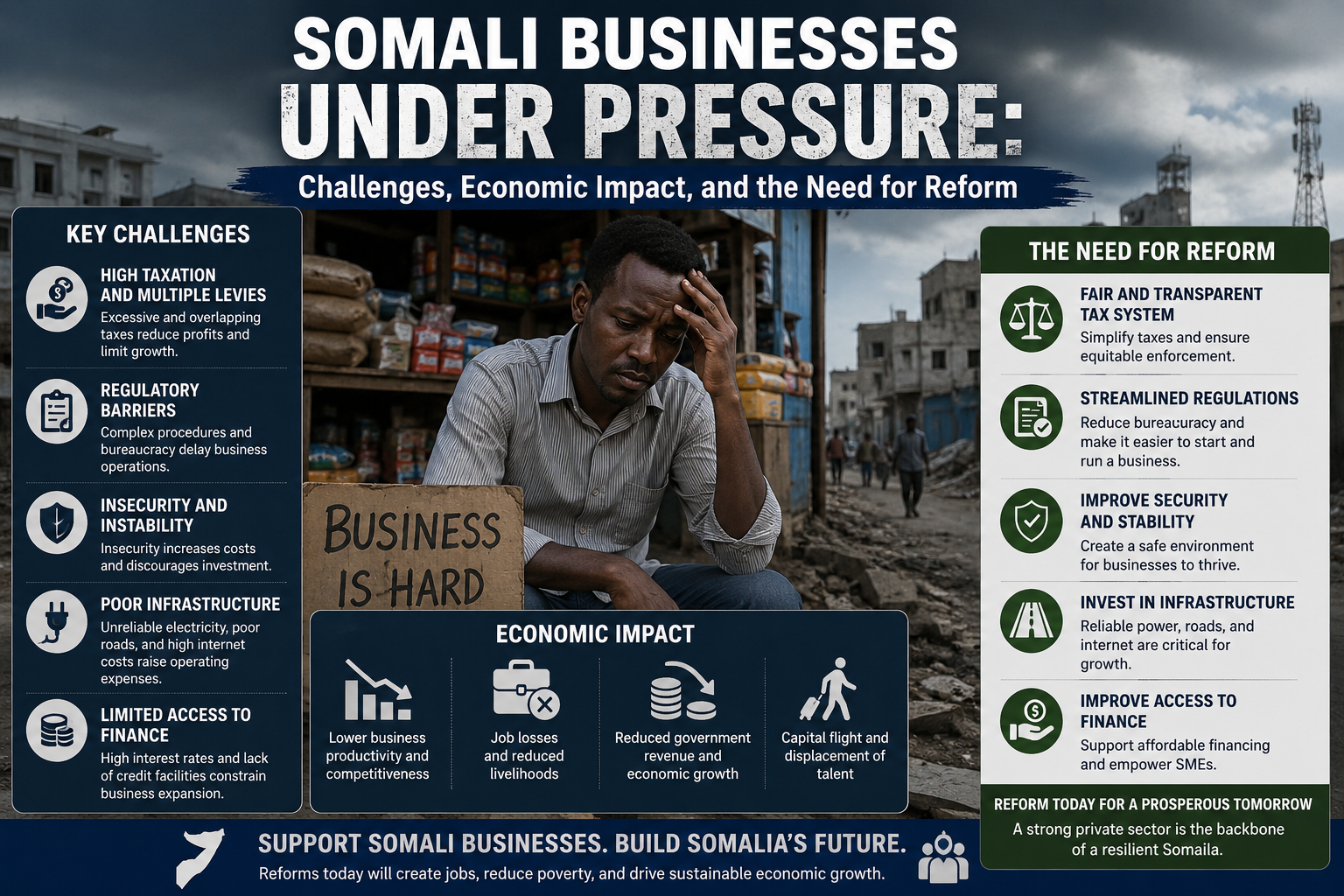
Today, the private sector remains the backbone of Somalia’s economy. However, businesses continue to face serious domestic and structural challenges that limit investment, reduce competitiveness, and slow economic growth. Addressing these issues is essential for Somalia’s long-term economic stability, employment generation, and private sector development.
1. Lack of Clear Policies and Weak Regulatory Frameworks
Many Somali businesses operate without clear and predictable regulatory systems. Inconsistent licensing procedures, weak contract enforcement, unclear taxation policies, and unresolved land disputes create uncertainty for investors and entrepreneurs.
The absence of strong legal and regulatory institutions discourages long-term investment and weakens business confidence.
2. Taxation Without Economic Assessment
Businesses frequently face multiple and overlapping taxation systems from different levels of government and local authorities. Taxes are often introduced without proper market analysis or consultation with the private sector. This increases operational costs, reduces profitability, and places heavy pressure on small and medium-sized enterprises.
3. Poor Infrastructure and Transportation Challenges
Underdeveloped roads, limited transport infrastructure, and insecurity significantly increase transportation costs across Somalia. Businesses transporting goods between regions face delays, product damage, fuel expenses, and operational inefficiencies. Weak infrastructure also limits trade, agricultural supply chains, and industrial development.
4. High Electricity and Utility Costs
Somalia continues to experience some of the highest electricity costs in Africa due to reliance on privately operated diesel-powered systems. High utility expenses reduce competitiveness, discourage manufacturing, and increase the overall cost of production for businesses.
5. Skills Gap and Limited Professional Workforce
Many businesses struggle to find adequately trained professionals due to weak vocational training systems and limited practical education. The shortage of skilled workers affects sectors such as finance, engineering, ICT, administration, and customer service, forcing companies to invest heavily in internal training.
6. Political Instability and Security Risks
Political disagreements, insecurity, illegal checkpoints, and extortion continue to increase business risks and discourage investment. Investors require stable governance, predictable policies, and secure business environments before committing long-term capital.
7. Inflation, Import Dependency, and Capital Flight
Heavy dependence on imported goods exposes Somalia to global price fluctuations and inflation. Rising transportation costs, fuel prices, and taxes increase the cost of living and reduce consumer purchasing power. In addition, many Somali investors increasingly move their capital abroad in search of stability and better investment conditions.
Key Recommendations
· Develop clear and consistent business policies and strengthen commercial law enforcement.
· Introduce fair and research-based taxation systems through consultation with the private sector.
· Invest in roads, transport systems, energy infrastructure, and logistics networks.
· Expand vocational education and workforce development programs.
· Strengthen security and political stability to improve investor confidence.
· Support local industries and manufacturing to reduce import dependency.
· Improve access to finance and business support services for small and medium-sized enterprises.
Conclusion
Somalia’s private sector has demonstrated extraordinary resilience over the years. However, resilience alone cannot sustain economic growth without strong institutions, infrastructure, security, and supportive economic policies. If Somalia is to unlock its economic potential, serious reforms and strategic investments are necessary to create a stable and competitive business environment.
A stronger partnership between government institutions, the private sector, financial institutions, and development partners will be essential for building a sustainable and inclusive Somali economy.
Written by: Warsame Mohamed Hassan
Disclaimer:
This article reflects the views and analysis of the writer based on professional observations and publicly available sources.
Comments
Loading...